
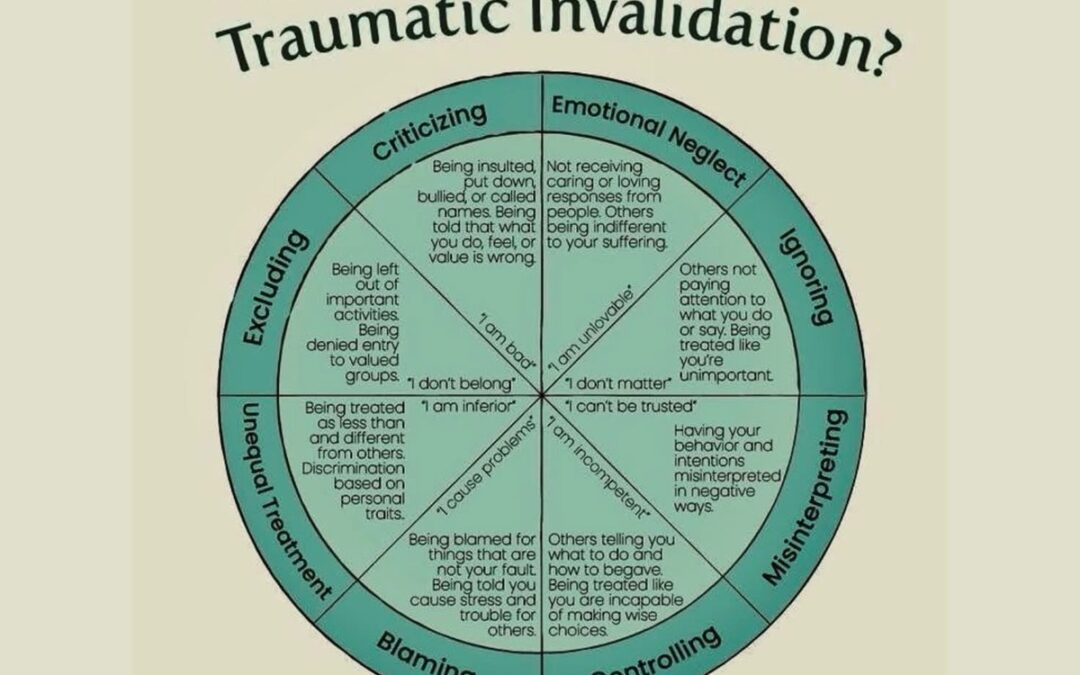
This wheel explains something so many people have felt but never had words for.
Traumatic invalidation isn't just one big event. It's the accumulation of small, repeated messages that told you:
Your feelings don't matter.
Your needs are too much.
Who you are is wrong.
Look at the categories:
🔹 Criticizing — being put down, insulted, or told what you feel is wrong → "I am bad."
🔹 Emotional Neglect — not receiving care or love when you were suffering → "I am unlovable."
🔹 Ignoring — being treated as unimportant or invisible → "I don't matter."
🔹 Misinterpreting — having your intentions read in the worst possible way → "I can't be trusted."
🔹 Controlling — being told how to behave, treated as incapable → "I am incompetent."
🔹 Blaming — being blamed for things that weren't your fault → "I cause problems."
🔹 Unequal Treatment — being treated as less than, discriminated against → "I am inferior."
🔹 Excluding — being left out or denied entry to valued groups → "I don't belong."